Tuesday, May 7, 2013

Natural Answers for Allergies

By Maria Noël Groves, Clinical Herbalist & Co-op Wellness Educator

I live with a pollen count barometer. He starts honking and sneezing as soon as tree pollen releases into the early spring breeze. He peaks again with the grass mid-summer, and he doesn’t end until the last of the ragweed dies back to the ground. If we have a wet fall, the mold kicks in. We can’t have any pets because of, you guessed it: allergies. Unfortunately, indoor/outdoor allergies including pet dander and ragweed pollen bog down a lot of folks. Nearly 40 million Americans suffer from allergic rhinitis due to indoor/outdoor allergies, and seasonal allergies alone account for more than 8 million doctors visits each year.

We may see the natural world as a major cause of allergies, but it can also be a source for relief. Several herbs and foods have antihistamine effects. You can reduce or eliminate your seasonal allergies by taking a few natural remedies and tweaking your lifestyle and diet. You don’t have to turn to Claritin. I promise. Here’s how…

Allergies 101

Ragweed - a culprit AND a remedy!
Your basic allergic response begins with an allergen, such as pollen. Once the allergen enters your body, it encounters a type of white blood cell called a B lymphocyte. The B cell produces antibodies, which recognize the allergen and also contain immunoglobulin (Ig). IgE is most often involved in allergic reactions. The antibodies grab onto the allergen, which attract other immune cells including mast cells. The mast cells release histamine, which causes your allergy symptoms: tissue inflammation, sneezing, itching, swelling, watery eyes, etc. From your body’s point of view, the histamine response controls any possible infection, eliminates the allergen through runny noses, etc, and activates immune cells to fight the perceived infection.

Unfortunately, our bodies often become allergic to substances that would normally do little or no harm. Pollen, pet dander, peanuts, and dust are not inherently bad; however, our bodies may mark them as dangerous and produce antibodies for them. Two major things can determine your allergic reaction: 1. the intensity of exposure to one or more allergens, and 2. the health of your immune system. Several experts also believe in the “hygiene hypothesis”: we develop allergies to harmless things because our environment is too clean of disease-causing microorganisms. Studies have found that children who are exposed to ample germs and have more small infections when they’re young have fewer allergies and illnesses as adults compared to children who grew up in less germy environments. On the flip side, environmental pollutants like smog, new carpet chemicals, fresh coats of paint, and second-hand smoke can aggravate asthma, allergies, respiratory health, and chemical sensitivities/allergies.

Solution 1: Underlying Food Allergies, Lessening the Load

Many alternative health practitioners theorize that allergies become worse as the load or stress to the body is increased. I know several people who had terrible seasonal or pet allergies and/or chronic respiratory issues that almost entirely disappeared once food sensitivities like dairy or gluten were recognized and eliminated.

Targeting your own individual allergies and sensitivities can be tricky. Common food allergens include dairy, soy, wheat and gluten, corn, eggs, nuts, chocolate, coffee, citrus, and tomatoes. Common environmental allergens include mold, yeast, dust, animal dander, and various types of pollen. However, anyone can be allergic to anything. I know people who are allergic to beans, bananas, kiwi, and quinoa. Skin/scratch tests can be helpful for diagnosing specific allergies. They are not always accurate, but they are easy to do and inexpensive. Your doctor, naturopath, or allergist can also take a blood sample and perform a test tube allergen-specific IgE antibody test. This is more expensive and rarely covered by insurance. However, it tests a broad range of foods and allergens and can be extremely helpful (but also not perfectly accurate) in pin-pointing sensitivities and allergies. Listen to your body; you might already know what you’re sensitive to once you reflect on it. Keep a food diary to look for patterns. Try eliminating all common allergenic food for a few weeks and reintroduce them one at a time. Once you identify an allergy or sensitivity, try to avoid or reduce exposure to it. This is your best bet for better health and reduced allergy symptoms overall. You may not be able to avoid pollen, but you can control your diet.

Solution 2: A Happy, Healthy Lifestyle

Inflammation, stress, and a weakened immune system can also aggravate allergies. For example, I don’t generally have allergy problems, but if I run myself ragged, ragweed knocks me off my feet. It’s always a good idea to take a few steps back and get a good night’s sleep, especially if you know your worst allergy season is approaching. Address stress because it can cause inflammation. Too much sugar, dairy, refined carbohydrates, red meat, trans fats, fried food, processed food, and perhaps even nightshades (tomatoes, peppers, eggplant, potatoes) can also contribute to inflammation in the body. Inflammation can manifest itself via allergies, arthritis, skin problems, etc. A diet rich in fruits and vegetables – especially those green leafies like kale and nettles and deeply colored berries – can help the body favor a more anti-inflammatory environment. Omega-3 fatty acids found in wild-caught salmon, herring, and sardines, as well as flax seed oil and raw walnuts, encourages the body to make more anti-inflammatory compounds. Beneficial bacteria from supplements, yogurt, keifer, fermented vegetables, and sauerkraut, may also reduce inflammation and allergies. Culinary seasonings – turmeric, ginger, cinnamon, Indian spices, and Italian herbs – can be eaten or taken in supplement form to curb inflammatory processes and fight cranky free radicals.

Solution 3: Herbs, Supplements & Techniques

Horehound, fresh from the garden

These remedies can be used with or without the diet and lifestyle suggestions above. While diet and lifestyle are more likely to get to the root of allergy problems, many people keep their allergies in check with remedies alone.

Horehound (Marrubium vulgare) ~ Clearing Mucus, Post Nasal Drip & Wet Coughs
This bitter mint-family herb gained popularity as an expectorant for wet coughs and in the old-fashioned horehound candy. However, I’ve had great response using homegrown fresh horehound tincture for clients who can’t seem to clear up mucus associated with allergies: post nasal drip, sinus congestion, and wet lung congestion. Horehound generally works quickly and effectively, bringing relief when little else would do the trick. My teacher Michael Moore found horehound useful for asthmatic children as well, and noted that store bought herb didn’t seem to be as effective. Harvest the fresh leaves and flowers in summer to tincture fresh. Dry for tea or homemade capsules. Cautions: Horehound may (rarely) raise blood pressure, and it tastes bad.
Note: Horehound tincture is oddly uncommon in allergy products commerce - the only Co-op allergy product I could find it in was the Co-op brand Sinus Breaker (which includes other great sinus-clearing herbs like horseradish), but it is also in a nice expectorant Compound Horehound formula by Oregon's Wild Harvest (look with the cough syrups). However, you can easily grow this herb and make your own tincture - see directions at the end. You can special order Herb Pharm's hourehound tincture as well.

Goldenrod - a remedy oft wrongly blamed
Goldenrod (Solidago canadensis) & Ragweed (Ambrosia artemisiifolia) ~ Weedy Allergy Help
These two herbs are often thought to cause allergies, yet they may also act as remedies. It’s true that ragweed is the nearly invisible culprit behind most late summer hayfever symptoms. Goldenrod rarely causes allergies, but its showy yellow flowers bloom at the same time, right next to inconspicuous ragweed. I’m impressed by the apparent anti-histamine effect of goldenrod as well as its ability to help thin mucus and drain the sinuses. Ragweed seems to also reduce histamine and dry up congestion. Both tend to take effect within the day. Harvest the top third of goldenrod just as the flowers begin to open. Harvest ragweed leaves well before they flower or produce pollen. Once you train your eye for ragweed’s distinctive leaves, you’ll see it everywhere. I prefer to tincture both plants fresh, but you can also dry them for tea. (Goldenrod flowers turn to fluff when they dry; it’s ok.) You’ll have a hard time finding either remedy in stores, but they can be easily made at home. Most species within each genus work similarly. Cautions: Although it’s unlikely to cause problems, don’t take ragweed if you’re pregnant.
Note: The Co-op doesn't carry plain goldenrod tincture; however, it's easy to make from the wild herb (see directions at the end), and it is an ingredient in most of the herbal allergy tincture blends sold at the Co-op, including Herbal Energetics' AllerFree and Sinus Aid, and Herb Pharm's Pollen Defense. You can special order plain goldenrod tincture from Herb Pharm as well. Ragweed is nearly nonexistent in commerce as an herbal extract, though the homeopathic form is often included in homeopathic allergy formulas.

Nettles (Urtica dioica) ~ Nutritive & “Antihistamine”
Stinging Nettles are worth a shot
A few small studies on freeze-dried nettles found that it reduced allergy symptoms for participants. Results were not as positive for tea or non-freeze-dried forms of the herb, though some people do find those forms helpful. In my experience and that of my peers, nettles only quells allergies in about half the people who try it. However, it’s such a beneficial, safe herb to try first. The mineral-rich leaves make a nutritious tea and can be cooked like spinach in recipes. On top of this, the plant is diuretic, alkalizing, and may decrease inflammation in osteoarthritis. Harvest nettles in spring before they flower; wear gloves and long sleeves to avoid the sting. Cautions: Nettles are generally very safe and can be consumed in ample amounts as food. Fresh nettles sting, which is painful but rarely dangerous.

Quercetin ~ “Antihistamine” Bioflavanoid
Though not specifically herbal, I have seen the most universal allergy improvements with this bioflavanoid extract. Found naturally throughout nature in apples, green and black tea, red onions, red grapes, lovage, and oak bark, quercetin supplements are usually derived from corn.  In supplements, you’ll often find it in combination with bromelain and vitamin C. Quercetin works best as a preventative. Start taking it a few weeks prior to, then throughout the allergy season. Research on quercetin is limited; however, it appears to act and an antihistamine, antioxidant, and phytoestrogen. Some studies found that increased apple consumption (naturally high in quercetin) improved lung health in people with lung disease including asthma and bronchitis. Different supplement manufacturers use different concentrations and formulas; follow label instructions. Eating more organic apples and other quercetin-rich foods may help. Bear in mind that conventional apples are among the most pesticide-ridden produce out there; even organic apples should be washed thoroughly. Cautions: There is a theoretical drug interaction with hormone drug therapies due to quercetin’s estrogenic activity. Consult your practitioner if you are pregnant, breastfeeding, or have a risk for estrogen-dependent cancers.

Bromelain (Pineapple) ~ Anti-inflammatory Enzyme
This protein-digesting enzyme is found in pineapple, particularly the core. For allergies, it is often combined with quercetin, and it has the most scientific evidence of all the remedies discussed. (Of course, a lack of research doesn’t mean a remedy doesn’t work!) While bromelain can be used to improve digestion, it is better known and researched as an anti-inflammatory. It appears to “digest” protein-based inflammatory compounds and act as an antihistamine. Research on sinusitis suggests that it also helps by thinning mucus secretions. The supplement is also used for pain, inflammation, sprains, tendonitis, post-operative swelling, rheumatoid arthritis, asthma, and bronchitis. Research suggests it may also improve immune health via white blood cells. Measurements of activity vary, as do dosage ranges in products. Follow label suggestions. Enteric-coated supplements appear to be more beneficial, although they are also less available. Fresh pineapple and pineapple juice have a milder yet useful effect, but they sometimes cause mouth irritation. Cautions: Bromelain is generally safe. Don’t use it if you have a pineapple allergy. Because bromelain thins the blood, use caution if you take blood-thinning medications or have a bleeding disorder.

Butterbur (Petasites hybridus) ~ Anti-inflammatory for Allergies, Asthma & Migraines
Butterbur has been prescribed in Germany for more than 30 years for the treatment of migraines, and it’s just gaining popularity in the United States. I’m most apt to turn to butterbur for clients who have a pattern of allergies, asthma, and/or migraines since it works well for all three conditions. Several studies have confirmed its use, and I’ve seen it work better than migraine medication for some people. It appears to inhibit inflammatory compounds leukotriene and histamine and relax smooth muscles. In a German study with more than 300 participants, butterbur worked better than placebo and as well as Allegra for hay fever symptoms with experienced fewer side effects (no drowsiness) compared to the drug. Most of the research has been done on the trademarked Petadolex, a special extract of butterbur that does not contain pyrrolizidine alkaloids (PAs), which can be toxic to the liver. Because of butterbur’s PAs, this is one of the few herbal remedies I don’t make myself. According to research and epidemiological evidence, PA-free butterbur is well tolerated with few side effects or drug interactions. However, I personally experience extreme nausea when I take it, and I know a few others who have the same response.

“Bitter Berberines” ~ Dry Things Up & Fight Bacteria & Fungus
Goldenseal (Hydrastis canadensis), Goldthread (Coptis spp),
Oregon Grape Root (Mahonia aquifolium) & Barberry (Berberis spp)

These herbs come from two different plant families but have a common primary constituent: berberine. This bright yellow alkaloid concentrates in the roots and is also present in the leaves; it has potent antimicrobial and astringent properties. It is the basis for goldenseal’s claim to fame as an herbal antibiotic. All the herbs tighten boggy, inflamed membranes and fight bacterial, fungal, and protozoal infections, particularly on contact. Small doses help stimulate and tonify tissues, high doses for infections. For allergies, these herbs help dry up weepy eyes and nasal passages while fighting co-infections like sinusitis. The plants’ antihistamine-like action works when taken internally as a tea, capsule, or tincture. Berberine tastes bitter, stains yellow, and is hard to disguise. Antimicrobial actions of berberine work best on contact. For sinusitis or similar infections, try using berberine-rich tea or tincture along with salt water in a neti pot. I limit my use of goldenseal and coptis because they’re highly threatened in the wild. Opt for organically cultivated herbs when you must use them, and also seek out more sustainable sources of berberine like Oregon grape root and barberry root. Do not use these plants while pregnant or nursing. Long-term use of berberine is controversial (and usually unnecessary) due to its antibacterial effect.

Nasal Irrigation & Neti Pots
If Oprah and Dr. Oz like neti pots, then they’re good enough for the rest of us, right? Several recent studies have confirmed what Ayurvedics have been practicing for centuries: nasal irrigation with a hypertonic saline (high salt) water solution significantly decreases nasal irritation in allergies and sinusitis, and it prevents/reduces symptoms throughout the allergy season. Dead sea salt solutions may be more beneficial than regular salt because the magnesium in it could be anti-inflammatory. Nasal irrigation is well tolerated, inexpensive, and effective for a variety of age groups, including children. Neti pots look like genie lamps or teapots. Fill the pot with warm salty water, lean forward and tilted over a sink, and then gently pour the solution into one nostril. If your nasal passages are mostly clear, the solution will work its way around the septum and out the other nostril. If they are not clear enough, it will gradually help resolve some of the mucus and irritation. It feels like snorting salt water at the ocean, but you get used to it. Most neti pots come with directions. Goldenseal, echinacea, Oregon grape root, and other herbal extracts or teas can be added to the solution for a stronger effect. Be sure to blow your nose gently, without covering one nostril, so that you don’t force fluid toward your ears.

Make Your Own Fresh Herb Tincture

 Tinctures are incredibly easy to make! (Pictured: horehound)

 Have fun and save money: Make your own tinctures from common anti-allergy herbs and weeds like horehound, goldenrod, and ragweed. Once you’ve harvested the herbs, simply chop them up, stuff as much as you can into a jar, and cover it with 50 to 95 percent alcohol (100-proof vodka or 190-proof whole grain alcohol). Let it sit for at least one month and strain, squeezing as much as you can through a clean cloth. Your finished tincture will keep in a cool, dark, dry place for about one decade. Other helpful respiratory herbs to look into include dandelion root, echinacea, elecampane root, mullein, thyme, hyssop, bee balm, lobelia (with caution), horseradish.

Horehound seedlings are sometimes hard to find, but this is a good time to look for them. Click here and here for lists of local herb growers and herb-friendly nurseries, and then call to see if they have it in stock. Some other plants are also called horehound, so be sure it has the Latin name Marrubium vulgare. One plant will easily provide you enough medicine for a year (or more), and they usually overwinter. Plant it in a well-drained, sunny spot. Good soil isn't necessary.


  The statements made on this blog have not been evaluated by the FDA and are not intended to diagnose, prescribe, recommend, or offer medical advice. Please see your health care practitioner for help regarding choices and to avoid herb-drug interactions.

Tuesday, April 23, 2013

Herbal Healing on the Go! Build Your Own Natural First Aid Kit


By Maria Noël Groves, Clinical Herbalist & Co-op Wellness Educator


A few weeks after I graduated from college, I stuffed a backpack to the brim and headed across Europe. I’d just begun to delve into herbal medicine, and one of my traveling companions had a new degree as an athletic trainer. We both squeezed first aid kits in our packs with remedies for similar purposes, but the actual contents varied according to our philosophies. She carried Neosporin and antiseptic wipes, I carried honey and tea tree essential oil. When someone got nauseous, they could choose Dramamine or crystallized ginger. And although my medical-minded friend poo-pooed most of my kit’s contents, 15 years later she admits I was on to something.

No home is complete without some kind of first aid kit. Stashing a kit in the linen closet, car, purse, or suitcase provides a little extra security no matter where you are. It’s easy and invaluable to incorporate herbs and natural remedies into your kit, but it’s still only useful if you actually have what you need in an emergency. Before you compile your kit, first ask yourself some questions so you can create the most useful kit for your family.

Location & Shelf Life: Your home kit has the most flexibility because you have plenty of space, good storage conditions (cool, dark, dry cabinets and closets), and even access to a refrigerator. But if you plan to stash your kit in the car, you’ll need something smaller with remedies that can withstand the elements. Water-based liquids will freeze and break containers. Oil-based remedies go rancid quickly in a hot car, salves will melt, alcohol might explode (unlikely but could happen at 170°F or higher, depending on the proof), and dry herbs and teas will get cooked to oblivion. Tinctures work well for car kits because they will last for a few years and the combination of alcohol and water makes them unlikely to freeze or explode. If you’re traveling or always carrying your kit, just bring the bare bones necessities and nothing that requires refrigeration. When I go on 120-mile kayak/portage treks, I carry just a few tiny bottles and think creatively about what wild plants I can use in a pinch. Keep small servings of your most-needed remedies in your purse. For kits-to-go, keep 1/4- and 1/2-ounce dropper and spray bottles on hand for easy packing and administering. I prefer glass, but plastic may work better in some situations. Poke around herb shops and online (or break out your sewing equipment) for cute cloth carriers that hold bottles so they’re unlikely to break, or just wrap the bottles and store in Ziploc baggies. (If you don’t, something’s sure to break or leak!) Individually wrapped products from the natural food store are great for first aid kits: tea bags, herbal candies, homeopathic remedies, electrolyte and magnesium packets, natural antiseptic wipes, blister packs of probiotics and other natural remedies, etc. Homeopathic remedies are also perfect for first-aid kits.

What You Will Need:
 Where are you going, and what will you need? When I traveled to Guatemala, I knew my normally rock-solid digestion would be challenged. I packed shelf-stable probiotics, hard ginger candies (which held up to the heat and humidity better than chewy candies and crystallized ginger), ginger capsules, and electrolyte packets. But if you’re packing for summer vaca with kids, remedies for bumps, bruises, wounds, splinters, bug bites, and poison ivy will more likely be in order. Think about what kinds of ailments are most likely to pop up for your family in a variety of situations, and stash remedies where you think you’ll need them. It’s easy to go nuts and pack everything under the sun… only to have it all go unused and get tossed a year or two later when it’s out of date.

Multitask: When possible, choose remedies with more than one purpose. For example,
lavender essential oil helps with almost any topical ailment you can think of: rashes, itchy skin, infections, burns, general sanitization, repelling bugs, etc. (Store-bought lavender wipes work in a pinch, but the straight essential oil also works well.) The scent of lavender also aids anxiety and insomnia. Echinacea/goldenseal/propolis throat spray does double-duty for topical infections. Lemon balm tincture (made with fresh leaves) helps heal cold sores externally while soothing nerves and digestion internally. Kava tincture works across the board for most adults with anxiety or insomnia. For children, go for chamomile, which also helps with indigestion and teething. I keep homemade calendula and St. John’s wort salve in lip balm tubes for itchy rashes, diaper rashes, wound healing, and hemorrhoids; remove salve from the tube with your finger or a cloth so you can use one tube for multiple purposes without contaminating it.

The Basics:

Almost every first aid kit should include the following. Pick the one(s) that you prefer and work best for your family.
  • Anti-nausea: Ginger candies, crystallized ginger, and peppermint candy or gum quell motion sickness, morning sickness, and nausea from cancer treatments. Gum’s handy for airplanes because it helps keep the air pressure from building in the ears.
  • Antiseptic, Disinfectant & Wound Healer: Lavender and/or tea tree essential oil, essential oil wipes (ie: lavender, tea tree, oregano, or thyme), echinacea/goldenseal “throat” spray, or Kloss’ liniment can help with a variety of skin infections and may also soothe itches. Alcohol and vinegar can disinfect. Raw honey cleans and heals wounds. Comfrey heals/seals skin very quickly but does not disinfect and shouldn’t be used on deep or infected wounds. Seek medical attention if an infection continues to worsen or doesn’t get better within 24 hours.
  • Pain Reliever: Powdered magnesium (mixed in water) helps with muscle pain, spasms,
    headaches, and migraines. White willow bark acts as a mild, natural aspirin. Turmeric and ginger help relieve inflammation. I make my own “loose muscles” tincture with a variety of herbal pain relievers including pedicularis, California poppy, and small amounts of corydalis, wintergreen, and birch. Look for pain formulas at the herb shop or natural food store, too. But, be sure ahead of time that the remedy actually works for your family. Natural pain remedies are finicky, milder than conventional NSAIDs, and may cause stomach upset.
  • Sedative: Chamomile for children. For adults, try kava has the broadest, fastest action, but also consider valerian, skullcap, lemon balm, or passionflower to help induce sleep and calm anxiety. Also consider flower essences like Bach’s Rescue Remedy or FES’s Five Flower Formula, which can be used topically and internally for stress, anxiety, trauma, and rashes.
  • Standard Supply: Bandages, tweezers, thermometer, etc. I still keep Benadryl and ibuprofen on hand, just in case. If you'll be somewhere warm, don't forget the natural bug spray and sunscreen.

Extra First Aid Remedies for Common Ailments:

Definitely don’t feel like you should have ALL these remedies. Only stock for ailments that tend to afflict your family (or that you anticipate with travel), and choose a remedy or two that best works for your family from the options. Unless specified, most of the herbs can be used internally as teas, tinctures, or capsules; or externally as an herb-infused oil, salve, poultice, or wash.

Topical First Aid (External use unless specified)
  • Bumps & Bruises: Arnica (not on broken skin), gotu kola, Rescue Remedy. Rescue Remedy, gotu kola, and homeopathic arnica tabs can also be taken internally.
  • Rashes, Poison Ivy, Bug Bites: Lavender and/or tea tree essential oil or wipes, calendula oil or salve, plantain poultice or oil/salve. Apple cider vinegar, jewelweed, or grindelia specifically ease poison ivy rashes.
  • Infections: Berberine-rich plants (organically cultivated goldenseal, coptis, barberry, Oregon grape root, such as in a throat spray or Kloss’ liniment), oregano/bee balm, lavender, honey. Chaparral and thuja are particularly helpful for fungal infections.
  • Blisters: Apply under a bandage or overnight: almost any salve (calendula, lavender, plantain…), plantain poultice, honey.
  • Hemorrhoids: Calendula oil or salve, witch hazel, yarrow.
  • Sunburns & Burns: St. John’s wort oil can prevent and treat, lavender essential oil, apple cider vinegar, calendula, fresh-cut and applied aloe or cactus pad, cool green tea, self heal, or chaparral wash, ice or cool water.
  • Herpes: Lemon balm tincture (internally and externally) or cream, St. John’s wort oil, licorice powder, cayenne/capsaicin oil or salve (will burn at first, don’t get in eyes or on genitals). Calming herbs internally.
  • Splinters & Stings: Remove splinters with sterilized tweezers or needle or attempt to draw out with clay paste, plantain poultice, pine/fir pitch, or ripe banana peel. Plantain is specific for stings and other bites. Consider echinacea tincture topically and internally if there is concern of infection (classic remedy for snake bite) or apply a berberine-rich remedy and then apply a compress of aloe for the day. Of course, get to the hospital immediately if there is a severe reaction, dangerous bite, or significant infection.
  • Topical Pain: St. John’s wort oil relieves nerve pain including rashes, burns, and sciatica. Arnica or Rescue Remedy for trauma and bruising. Cayenne salve or cream for many types of pain including arthritis (will burn at first, don’t get in eyes or on genitals). Diluted wintergreen essential oil has aspirin-like effects, and peppermint essential oil/menthol serves as a counter-irritant and pain reliever.

Digestive Distress
  • Gas, Pain & Bloating: Peppermint (especially internal essential oil preparations), fennel seeds, cardamom, probiotics, digestive enzymes.
  • Constipation: Yellow dock root, Triphala, Smooth Move or senna tea (short-term only), digestive bitters (milder), probiotics.
  • Diarrhea: Cinnamon, carob, electrolyte packets, miso soup, probiotics.
  • Nervous Indigestion & Colic: Chamomile, catnip, lemon balm.
  • Indigestion: Peppermint, balm tea, digestive bitters, Neutralizing Cordial, digestive enzymes, nervous indigestion remedies.
  • Acid Reflux, Heartburn & Ulcers: Licorice or DGL tablets, slippery elm, Throat Coat tea, plantain. Raw apple cider vinegar helps some cases of reflux. Comfrey leaf tea can heal digestive wounds quickly but may also be liver toxic and is not generally recommended for internal use. Ulcers will probably still require medical attention.
  • Food Poisoning: Activated charcoal capsules, betonite clay, cinnamon, beberine-rich plants. For support: probiotics, ginger, electrolyte fluids, miso soup, fermented foods.

Pain
  • Headaches & Migraines: Magnesium powder (in water) or butterbur/Petadolex help prevent and stave off an oncoming headache or migraine. Feverfew helps preventively. Kava can help in a pinch for tension headaches. Coffee may stop an early migraine. (Regular coffee and NSAID use will ultimately cause withdrawal/rebound headaches and migraines.)
  • Aches & Pains: Turmeric, ginger, tart or black cherry, boswellia, magnesium, bromelain or fresh pineapple juice. Also see pain relievers in “Basics” and topical pain relievers.
  • Menstrual Cramps: Cramp bark (tincture is best, taken every 15 minutes) is the most widely effective. Also ginger, dong quai, magnesium, apply heat.
  • Gout: Tart or black cherry juice/extract, celery juice, celery ribs. (Best taken regularly.)

Stress, Insomnia & Anxiety

  • Energy: Caffeine works quickly and temporarily; green tea, chocolate, and yerba mate are my preferred forms. Adaptogen herbs have better energy benefits over time. For more stimulating energy, try rhodiola, ginseng, and/or eleuthero. For calm energy, try holy basil, gotu kola, milky oat seed, and/or bacopa. In the middle, try schizandra and/or ashwagandha.
  • Anxiety & Insomnia: See Sedatives in “The Basics.” For sleep, especially while traveling, try an eye mask and ear plugs.

Infections
  • Cold: Elder syrup, ginger, echinacea, umckaloabo (Umcka), andrographis, garlic, chicken or miso soup, cayenne, rest.
  • Flu: Elder syrup, rest, hot teas (or tincture added to hot water) of ginger, elder flower, yarrow, boneset, and/or peppermint to break a sweat.
  • Sore Throat: Echinacea/goldenseal/propolis throat spray, raw garlic, honey, lemon, oregano/bee balm, ginger, elder syrup, echinacea, slippery elm, Throat Coat tea, salt gargles or salty broth.
  • Throat Coat tea does double duty to soothe throats and acid reflux. True licorice candies may also help.
  • Sinus: Salt wash/neti, berberine-rich plants, goldenrod, horehound, or herbal steams with thyme, eucalyptus, peppermint, and/or oregano/bee balm herbs or essential oils.
  • Cough: Honey, wild cherry bark syrup, horehound, elder syrup, menthol candies.
  • Plain honey - preferably raw - does a nice job for sore throats, coughs, AND as a topical remedy to disinfect and heal wounds.
  • Allergies: Horehound, goldenrod, nettle, quercetin, bromelain, eyebright and berberine-rich plants, specific homeopathic remedies.
  • UTI: Cranberry juice, blueberry juice, blueberry leaf tea, uva ursi, juniper berries. Also watch your sugar and alcohol intake. Stop using the herbs and see a doctor immediately if it moves into the kidneys (lower back pain, fever, cloudy urine).

This is a BIG LIST. Remember: Try to pick just 5-10 of your own top-need items that your family likes best, for example...

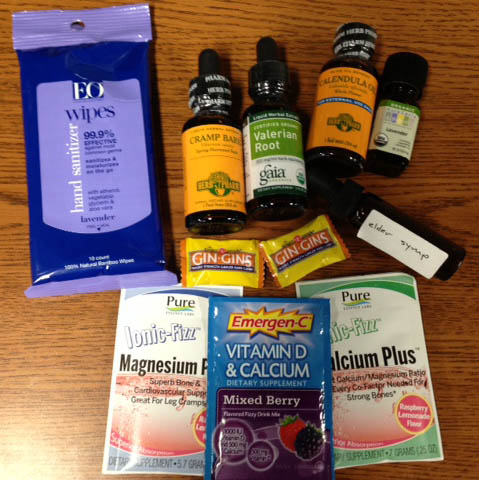
Here's a sample Travel Kit that I put together for a recent return trip to Italy:

  • Elderberry Syrup - To bolster my immune system (planes, lack of sleep, and visiting four children - oh my!), soothe sore throats, quell coughs. Should've brought more! This was surprisingly difficult to find for resupply in spite of an Erboristeria (herb shop) in every town. 
  • Calendula Salve - For itchy, dry skin issues like rashes, cracks on my feet, dry skin... also good for diaper rash, hemorrhoids, etc.
  • Lavender Essential Oil - For almost anything topical. Great to mix in with the calendula salve before applying. 
  • Lavender Wipes - For almost anything topical, including quick hand sanitation. 
  • Valerian Tincture - My go-to for sleep (as well as an eye mask and earplugs). 
  • Cramp Bark - For menstrual cramps, unfortunate timing.
  • Ionic Fizz Cal-Mag Packets - To keep my muscles and bones happy during hill hikes and long days of walking around the city. 
  • Gin Gins Hard Ginger Candies - Almost ran out of these on a windy drive up to Cortona - it's amazing none of the kids (nor I) puked! 
  • Ibuprofen and Benadryl (just in case), bandaids, tweezers.

Click here to learn how to make your own remedies.


The statements made on this blog have not been evaluated by the FDA and are not intended to diagnose, prescribe, recommend, or offer medical advice. Please see your health care practitioner for help regarding choices and to avoid herb-drug interactions.

Tuesday, April 16, 2013

Brain Boosters: Favorite Memory Herbs

by Maria Noël Groves, Clinical Herbalist & Co-op Wellness Educator

Whether we realize it or not, most of us to don’t function with optimal mental clarity. It might be a forgotten lunch date or afternoon brain fog at work or school. As we get older, we become more aware – and fearful – about our mental wellbeing. What can we do to undo the state of our brain so that we think clearly and remember everything?


First, the basics: A healthy, low-glycemic, whole foods diet with a range of anti-inflammatory and antioxidant foods is crucial. Adequate omega 3 fatty acids and B vitamins in the diet and/or supplement form also help. Living off stress, multitasking, and skimping on sleep are some of the worst things we can do for our brain function. Exercising (both your physical body and brain-teasing activities) and spending time in nature give it a boost. Beyond these basic tenants of healthy living, several herbs hold the power to enhance memory, focus, and function.

Gotu Kola (Centella asiatica) is safe, gentle, and lovely multitasker for the multitasker. In India and Asia, people have long relied on the herb to enhance memory. It enhances circulation, improves connective tissue support, decreases anxiety, and improves the body’s resistance to stress, all of which benefit memory and cognition. Studies also suggest that gotu kola improves the brain’s ability to use glucose for energy when blood sugar levels are low. The herb is generally safe, even for children, though you should be cautious combining it with blood-thinning medications.

Ginkgo Leaves

Ginkgo (Ginkgo biloba) standardized extract – available mainly as capsules – research has found that the herb generally improves memory and brain function for both healthy adults and those with memory-based disorders. Compounds in ginkgo increase circulation in medium and small blood vessels, which increases blood flow to the brain. It may help slow the progression of conditions like dementia and Alzheimer’s. The effects are not always immediately noticeable, so you may need to be patient to see results. Some people get a headache when they begin to use ginkgo, but this usually passes after a few weeks or with a reduced dose. Use caution with blood-thinning medications.

Bacopa (Bacopa monnieri) is helpful for mental function and focus. It’s a nootropic (“smart drug” or memory enhancer) that promotes memory and focus, relieves anxiety, slows the progression of Alzheimer’s, and improves recovery from brain trauma. Both bacopa and gotu kola are called “brahmi,” so check the Latin name to confirm.

Rosemary
Freshly Harvested Sage

Chocolate Mint (a variety of Peppermint)

Rosemary (Rosmarinus officinalis), a common culinary herb, shines for cerebral circulation. “Rosemary for remembrance,” is the classic catchphrase. Though this may be due to the intense fragrance, which perks up the senses and is not easily forgotten, rosemary is a powerful antioxidant herb that can help fight the oxidative damage that inhibits brain function. Recent research confirms the historical use of the antioxidant-rich herbs rosemary, sage (Salvia spp), and lemon balm (Melissa officinalis) for mental clarity. These herbs appear to improve short-term memory and slow dementia and Alzheimer’s in old age, perhaps by inhibiting acetylcholinesterase, an enzyme that degrades neurotransmitters. You can eat these herbs, drink them as tea, or take them as supplements. For a simple mental perk, simply inhale the scent of the fresh rosemary or its essential oil. The invigorating scent of peppermint (Mentha x piperita) has also been noted to improve brain function in studies. (Do not ingest the essential oil form of these herbs.) Use caution with blood-thinning medications.
Fresh Turmeric Root (Dry is Good, too!)
Fresh Carrot-Pineapple-Turmeric-Orange-Lemongrass Juice
 
Turmeric (Curcuma longa) has achieved stardom due to its many benefits including antioxidant, anti-inflammatory, vascular, and liver support, and general protective properties. It may be particularly helpful in staving off diseases like Alzheimer’s, which is poorly understood but characterized by oxidation, plaque buildup in the vascular system, and inflammation. Populations in India and Okinawa that consume turmeric regularly tend to have long, healthy life spans and exhibit significantly less incidence of these brain diseases. Turmeric is more bioavailable if you cook it with some oil. Adding a bit of black pepper improves absorption by 2,000 times! Use caution with blood-thinning medications.


Organic blueberries from Blueberry Gardens

Blueberries (Vaccinium spp) are arguably one of our most delicious brain foods. Researchers at Tufts’ Human Nutrition Research Center on Aging published a decade’s worth of human, animal, and lab studies demonstrating the diminutive blueberry’s ability to reverse age-related decline in mental function, fight oxidative stress, and improve symptoms of Alzheimer’s. Cultivated blueberries are helpful, but wild blueberries possess significantly more activity. Frozen blueberries offer the highest antioxidant content. Bilberry supplements can be substituted; they’re simply a European blueberry species.

Rhodiola (Rhodiola rosea) root is useful for someone who just needs a kick in the pants (or brain) to get off the couch and have better mental and physical energy. It’s a stimulating, fast-acting herb that helps reduce the effects of stress. Clinical research support its traditional energy and longevity uses. Studies found that it helped night shift workers and those taking exams perform better, and it can uplift the mood. But it can bother people who are easily agitated by stimulants, have bipolar disorder, or have sensitive stomachs.

These are just a few of the many brain-boosting herbs, foods, and supplements available to us. Others include omega-3 fish oils and fatty fish like salmon, B vitamins, vitamin C, holy basil, eleuthero, schizandra, gogi berries... While nothing is a guarantee, the healthier your overall lifestyle, the better your odds for optimal brain function now and as you age!


For more about stress and memory herbs, click here.

The statements made on this blog have not been evaluated by the FDA and are not intended to diagnose, prescribe, recommend, or offer medical advice. Please see your health care practitioner for help regarding choices and to avoid herb-drug interactions.

All photography by Maria, except the blueberries, courtesy of Blueberry Gardens.

Monday, March 18, 2013

Good Health Grows in Nature: Seeds to Sow

by Maria Noël Groves, Clinical Herbalist & Co-op Wellness Educator

In spite of a few last-season snowstorms, the itch for spring is on. We're dreamily eying the High Mowing Organic Seed rack in the Co-op's produce department, anticipating a summertime bounty of vegetables. But amidst those veggie and melon seed packets, you'll find some very useful culinary, medicinal, and ornamental herbs. I must admit, I am not one for growing plants from seed. Coddling plants is not something I do well. However, a few forgiving herbs like calendula don't seem to mind. For the rest, I tend to get my seedlings from local organic growers like Good Earth Farm, Snow Dragon Mountain Farm, or Red Fox Farm at the Co-op later in spring or at the NOFA-NH Herbal Network's Spring Herb and Garden Day (coming up in Concord on June 8). But, for those of you who like a good challenge, here are some of the most forgiving and useful herbs available on the Co-op's seed rack...


Calendula (Calendula officinalis)
Sunflower Family
This is one of our most ornamental garden herbs, and it’s also incredible multipurpose as food, medicine, and a topical remedy.
Medicinal Uses: Calendula is most famous as a skin care herb – when infused in water or oil and applied topically (as a poultice, bath, cream, salve...) it has a potent yet gentle soothing, healing effect. It’s the primary anti-itch and rash herb and can also be used for hemorrhoids, cuts and scrapes, dry skin, conjunctivitis, baby skin issues, and more. The flowers are almost equally famous as a pot herb, hence the name Pot Marigold. The orange-yellow hued blooms have 100 times the carotenoids of a sweet potato by weight! You can add the mild-tasting petals fresh like confetti to almost anything or a handful of the whole blooms (slightly bitter) to soups and tea. Feeding calendula to chickens makes their yolk brighter orange-yellow. Calendula is lesser known but also very useful as a tincture or tea to move the lymph and assist with detoxification. The sticky resin is responsible for calendula’s topical and medicinal properties; the color for the nutritive.
Growing Conditions: This annual will sometimes self seed (though it’s prone to mold that inhibits it) and is more often available as seed than seedling. Plant in spring or fall in good soil, full sun, with regular water. Clip the blossoms as needed – it simulates more growth, too. Happy calendula will bloom from June through November.
Tea Attributes: Vitamin-y and slightly bitter especially if using the middles of the flowers. Nice color for dry blends.
Try It As: Oil/salve/cream, bath/wash, soup, tea.


Holy Basil (Ocimum sanctum)
Mint Family
Conventional basil (O. basilicum) is a valued herbal plant, but I’m especially a fan of the purple-hued holy basil which has an aromatic, sweet taste and is revered in Ayurvedic medicine in India. It’s one of the few stress-relieving “adaptogens” that grows easily in the garden.
Medicinal Uses: Holy basil appears to modulate stress hormone output and help the body adapt to stress (“adaptogen”). In particular it may help lower cortisol, the stress hormone implicated in diabetes and abdominal weight gain. Holy basil makes a lovely tea for modest blood sugar control and to reduce carbohydrate cravings (great with jasmine green tea). The herb is calming and well-suited before meditation or a yoga class to promote a good mindset. It has many other uses, from colds and flu to ulcer protection to radiation protection. It’s a remarkable herb that is gaining ground in the U.S.
Growing Conditions: This herb thrives in a sunny location in well-drained rich soil. Basil species are well suited for containers, as seen throughout the Mediterranean neighborhoods, as well as in temples throughout Indian temples. Grow from seed, buy seedlings, or use a cutting. Harvest the top two thirds of the plant, just above a node, every few weeks. Basil will grow in all zones as an annual. Young basil plants are prone to “dampening off” due to fungus in wet soil. Water in the morning to help control this. I find holy basil to be more forgiving than conventional basil, though it will also not tolerate frost.
Tea Attributes: Holy basil has a strong aromatic scent reminiscent of cinnamon, mint, and bubble gum. Enjoy it on its own, with mints, lemon balm, or jasmine green tea.
Try It As: Tea, herbal honey, cordial...


German Chamomile (Matricaria recutita)
Sunflower Family
The tiny daisy-like chamomiles cheer up any garden and give it a meadow feel. The flowers and foliage have a light pineapple-apple scent to them. Also consider the hardy perennial & Roman chamomile (Chamaemelum nobile), which can be used similarly.
Medicinal Uses: Chamomile is best known as a relaxing herb. Many folks enjoy a cup of it before bed or to soothe frayed nerves. Bitter, aromatic properties also make it a great relaxing digestive remedy. It is a premiere children’s herb for digestion, colic, irritability, and teething (weak tea, chamomile popsicles or soak a cloth in tea, freeze, and let the baby chew on it.) Studies suggest that chamomile can even protect the stomach from ulcers.
Growing Conditions: Chamomile will thrive in most soils and conditions, though it prefers a sunny spot. Grow both types of chamomile by seed. Roman chamomile can also be grown by cuttings and root divisions. Dedicate a few leisurely mornings or afternoons throughout the growing
season to collect the small flowers for tea. While it may take a while to harvest an adequate amount, their flavor will surpass any store-bought chamomile. German chamomile is an annual that often reseeds. Roman chamomile is a perennial.
Tea Attributes: Often enjoyed solo, fresh and dry chamomile flowers also provide a light pineapple-y flavor to tea. Consider blending chamomile with mints, alfalfa, and lemon balm.
Also Try: Herbal honey, fresh or dry tincture.


More Herb-Growing Tips...
Herbs to Grow & Use - Extended Notes
Growing Global Flavor
The Art of Local Tea
Fast Flavorful Fresh Recipes with Local Herbs
How to Make Your Own Herbal Remedies
Recommended Reading
Useful Links for Seeds, Seedlings, etc.


Monday, January 28, 2013

Stay Healthy: Natural Cold & Flu Support

by Maria Noël Groves, Clinical Herbalist & Wellness Educator

Ingredients for ImmuniTea Chai
Viral infections appear to be running rampant this year. The flu and colds are sweeping through communities, increasing the risk of pneumonia, bronchitis, and sinus infections as well. Conventional medicine advocates the flu vaccine to prevent wintertime illness; however, many home remedies and lifestyle changes can also help to bolster your immune system against infections and to help recuperate quickly if you do get sick.


Prevention Tips
You know it already, but it’s worth repeating: Get enough sleep (this may be the MOST important). Eat healthy, whole foods. Wash your hands frequently. Also consider….

Green Tea: Components of green tea have been shown to boost immune function, fight bacteria, favorably alter gut bacteria (which helps the body’s immunity), and help prevent the flu. If you’re sensitive to caffeine, consider decaf.

Astragalus & Medicinal Mushrooms:
Astragalus (Astragalus membranaceus) root, as well as medicinal mushrooms like reishi, maitake and shiitake help strengthen the immune system when they’re taken throughout the winter. You can use them as capsules, tinctures, teas, or in food. I simmer them in soup broth, or I’ll simmer astragalus with ginger for tea and cook up mushrooms with dinner. Look for maitake and shiitake in the produce aisle; choose mushrooms with an earthy (not ammonia or bleach) scent and cook them in soups or sautes.

General Immune Tonics: Eat and drink plenty of garlic, ginger, onions, hot peppers and cayenne, chicken soup or broth, miso, fermented foods, and antimicrobial mint family herbs including oregano, thyme, savory, rosemary, sage, and bee balm. I love to make a tea of a half inch of fresh ginger grated with two lemon wedges, and honey.


If You Get Sick

As soon as you notice that tickle in the throat, congestion, or run-down feeling, it’s best to stay home, sleep as much as possible, and drink plenty of fluids including tea and chicken or miso soup. You’ll recover more quickly and will be less likely to pass germs to others. Also consider…
Pleasantly Tart Hibiscus and Elderberry Tea

Elderberry: Several clinical and lab studies support the traditional use of elderberry (Sambucus canadensis) to prevent viruses (including influenza “flu,” H1N1 “swine flu,” and rhinovirus “cold”) from replicating and spreading throughout the body. This helps prevent or reduce the severity of an infection if taken at the onset of the infection. Try elder syrup (i.e.: Sambucol), tea, tincture, capsules, or lozenges.

Echinacea: Several compounds in echinacea (Echinacea spp) work in a variety of ways, from boosting white blood cells and helping move lymph along, to numbing sore throats and decreasing inflammatory immune compounds that cause many of our annoying symptoms. Echinacea is best taken at the onset in high doses – 4 “squirts” (about 1 teaspoon) of tincture taken every waking hour or two – until the infection passes. If you’re tempted to take echinacea throughout the winter as a preventative, don’t. It’s not dangerous, but it’s not likely to be effective either. Fresh root tincture is the strongest form; however, tea and capsules as well as other echinacea species, leaves, flowers, buds, and seeds are also helpful. Echinacea is generally safe; however, it may aggravate autoimmune diseases as well as allergies in some sensitive individuals.

Also consume ample amounts of the “General Immune Tonics” listed above.


Recipes!
Click here for my favorite immune tea recipes
Click here for more great recipes including mushroom and bone broth, elderberry syrup, and fire cider


Some Common Sense...
These claims have not been approved by the FDA. If you take pharmaceuticals, first check with your pharmacist and doctor for herb-drug interactions. If an herb does not seem to agree with you, stop taking it. If your symptoms become severe, do not improve, or worsen, seek the advice of your healthcare practitioner.

Wednesday, December 26, 2012

Feeling Overstuffed & Undernourished? Put Your Kitchen on a Mission!

by Maria Noël Groves, Clinical Herbalist & Co-op Wellness Educator

Let's face it: Now that the holidays are behind us, we're all feeling a little overstuffed and undernourished. Most of us know what we need to do - eat better, more vegetables, more exercise -  but it just seems a little lackluster and difficult. I'm pleased to be working with Chef Mike, the Co-op, and area experts to launch our Kitchen on a Mission: 10-Week Healthy Cooking Series  on Monday nights starting January 7! We won't be dolling out any magic bullets, but we seek to inspire you with delicious, simple, healthy recipes and cooking tips to reinvigorate and expand your healthy kitchen. Click here to learn more about the series and how to register. But, in the meantime, here are some simple tips to get you on your way:


Get Nutrient-Dense: As yummy as pasta and bread can be, they tend to fall in the (mostly) "empty calorie" category. Let your meals be inspired by fare that multi-tasks with lots of vitamins, minerals, good fats, fiber, protein, and antioxidant and inflammatory action. These include cruciferous vegetables, berries, orange vegetables, greens, seeds, nuts, mushrooms, whole grains, beans and legumes, wild-caught fatty fish, eggs, grass-fed meat in moderation, and yogurt.  Season with citrus, herbs, spices, seaweed, toasted sesame seeds, and a little bit of hard cheese, dark chocolate, or a drizzle of good extra-virgin olive oil. Soups, salads, stir-fries, smoothies, and veggie-based juices make it easy to load up on the good stuff.

Get Inspired: We are bombarded with the sights and scents of tasty but less-than-healthy food via ads and roadside attractions. Surround yourself with healthy cookbooks, blogs, magazines, and websites that remind you how appealing healthy cooking can be. EatingWell.com and its associated magazine and cookbooks are favorites in our house. Also check out VegetarianTimes.com and its magazine and cookbooks. The Power Foods book that will accompany our Kitchen on a Mission series is fantastic. Andrew Weil's new book True Food is loaded with gourmet anti-inflammatory recipes. Also check out cookbooks by noteworthy authors Ellie Krieger, Christina Pirello, and Deborah Madison. Even if you're not vegetarian or vegan, meatless cookbooks can help introduce you to new healthy recipes to integrate into your kitchen.

On the Go: Cooking meals at home and bringing your lunch to work is the best way to improve your health and stick to a budget. When eating out for special occasions, opt for restaurants that understand real food including the Co-op's Celery Stick Café, Spoon Revolution, and Sunny's Table in Concord; Republic and Cafe Momo in Manchester; and Lemongrass in Moultonborough. Also opt for one or none - appetizer, alcoholic beverage, or dessert - to go with your meal and start with a salad. (Beware of salads in chain restaurants - they often pack two to three meals worth of calories!) Check out the menus ahead of time; fried food is less tempting on your computer screen than when the scents are wafting around you. Don't be afraid to split a meal (just tip a little extra) or ask to have half your dish wrapped up to bring home for lunch the next day.

Crunching Numbers: If you want to lose weight, one way to approach it is to measure your portions and count calories. Yes, it's tedious, but it can be eye opening! Take your weight and multiply it by 12. This equals the maintenance calories for the average person, or how much you need to eat to maintain your current weight. Subtract 500 calories per day to lose one pound a week (or 1000 per day to lose two pounds), but don't go below 1200 calories and keep your goals reasonable so that they're easier to achieve and maintain. This is generally 400-600 calories per meal plus one or two 100-200-calorie snacks, but it varies widely from person to person. Click here for more on this approach.

Listen to Your Body: "Intuitive eating" involves paying closer attention to how you feel throughout the day, how hungry you are, and whether or not your body really enjoys the food that you're eating. It's useful in place of or alongside calorie counting. No matter what the numbers say, if you're ravenous, you should eat. (Better yet, eat something nourishing before you get ravenous.) Try to avoid letting yourself get overstuffed after a meal and realize that it's ok to be a bit hungry when you wake up and before meals. How do you feel after you eat particular foods? As time goes on, you'll notice that you crave and feel much better with healthy foods without a rush of excess sugar or refined carbs. (But, if you desperately want that cupcake, intuitive eating says you should have it, in a reasonable portion, and enjoy it.) Local dietician Hilary Warner specializes in this approach, and you can also learn more in the book Intuitive Eating.

Move More: A few things in life positively or negatively impact almost every aspect of health: diet, sleep, stress management, and movement. From a numbers perspective, exercise helps you burn calories to reach weight loss and maintenance goals in an easier, more sustainable way, but the benefits reach far beyond that to improved mood, disease prevention, etc. Any exercise is better than nothing, but certain types of exercise make a bigger impact on calories burned. Some of the best include the gym stair-climber (306 calories burned*), mountain biking (291), cross-country skiing (my favorite!) or running (273),   snowshoeing, biking, jogging or swimming laps (240), or kayaking, gardening, golfing or walking at a brisk pace (171).  Strength-train a few times a week to boost your overall metabolism so that you burn a tad more calories all day long, even when you're not exercising. Strength training includes weight lifting, lunges, push-ups, etc. Certain types of yoga, hiking, and sports incorporate aspects of strength training. *The calories burned are calculated for a 150-pound person doing the activities for 30 minutes.

Enlist Aid: Having someone to enjoy meals and exercise with improve your odds of sticking with a routine and meeting your goals. I'm fortunate to have a supportive husband. I'm the health nut foodie, and I have certainly improved the quality of the food Shannon eats since we met. Cooking dinner together is one of our favorite parts of the day. He's the outdoor enthusiast, and over the years I've taken up hiking, kayaking, cross-country skiing and am dabbling with jogging, and we try to incorporate these activities into our weekend/weeknight play time and vacations. If you live alone or have a less-than-supportive spouse, connect with friends or family members who share your drive. Meetup.com groups are a great way to connect with like-minded adventurous folks, too. When my husband had to study for a big test last summer, I enjoyed connecting with several different kayaking groups and one of my cousins to get out on the water. I have clients who get together to snowshoe with friends every X day of the week in winter. Talk about positive multi-tasking! Social time, time out in nature, and movement, all rolled into fun! Click here for an article on how to have get outside this winter.

Herbs & Supplements for Weight Loss: I really don't believe in magic bullets. I've yet to come across any supplement that is safe and effective enough to impress. All the previous tips are much more likely to get you to your goal while also improving your mood, decreasing inflammation, and preventing a variety of chronic diseases. However, some herbs and supplements can lend a hand to make it a little easier to stick to your routine and lose weight. Some help balance blood sugar, others boost energy, and yet others enhance metabolism or thyroid function. Green tea has the most promise across the board. I love to combine it with holy basil (aka tulsi) for stress-busting, craving-curbing, metabolism-boosting effects as a morning tea. Cinnamon or chai tea (without cream and sugar) after meals serves as blood sugar-balancing dessert. Adaptogenic herbs that help your body adapt to stress - rhodiola, holy basil, ashwagandha, and eleuthero - provide support. Click here for more information about helpful herbs. Certain nutrients also help: Studies suggest that getting adequate calcium from food or supplements helps us burn calories more effectively. Before taking herbs and supplements, talk with your healthcare provider and check with your pharmacist for interactions if you take pharmaceuticals.

What are YOUR secrets to good health? Share them in the "Comments" section below!


Thursday, October 4, 2012

Fire It Up! Fire Cider

by Maria Noël Groves, Clinical Herbalist & Co-op Wellness Educator

When autumn comes in with its winds and chills, New Englanders have traditionally turned to an old remedy to boost them up: Fire Cider. Recipes for fire cider vary from home to home, but the backbone is onions, hot peppers, and garlic chopped up and steeped in unpasteurized apple cider vinegar. Extra ingredients include honey, ginger, horseradish, turmeric, black pepper, citrus, or whatever else you feel like throwing in. The mixture is shaken daily and pressed out after about one month, result in in a pungent brew taking by the spoonful. Finished Fire Cider has the reputation mainly for warding off colds and other infections but also for curing hangovers, improving cardiovascular health, boosting digestive health, and decreasing inflammation.

I make batches of fire cider up several times a year with my students using the recipe here, and besides the medicinal uses, I like adding a dash to simmering soup broth, as a salad dressing, and in marinades. When the Co-op's Health & Beauty Manager showed me this new Shire City Herbals Fire Cider she was considering carrying, I had to try it. This remedy was a bit different! It's spicier and sweeter than mine, and I was instantly hooked. It's now available on the Co-op shelves by the cold and flu remedies, and it's gained fans among Co-op employees with a sense of adventure. I bought myself a bottle, and you can bet I'll be trying to replicate it next time my Fire Cider class comes around...

I also appreciate the fun and funky label on Shire City Herbals' Fire Cider bottle and the creative shot glass that comes with it. Husband and wife team Amy and Dana from the Berkshires in Massachusetts cover it with creative artwork and playful stories. Their recipe is made with organically grown roots and fruits, and they say "Fire Cider is like a large bear on a cold winter night - A large bear that mauls what ails you!" Learn more about the product at www.firecider.com and find it in the Co-op.

Be warned: If you have a tendency towards heartburn, this'll either cure it or cause it!